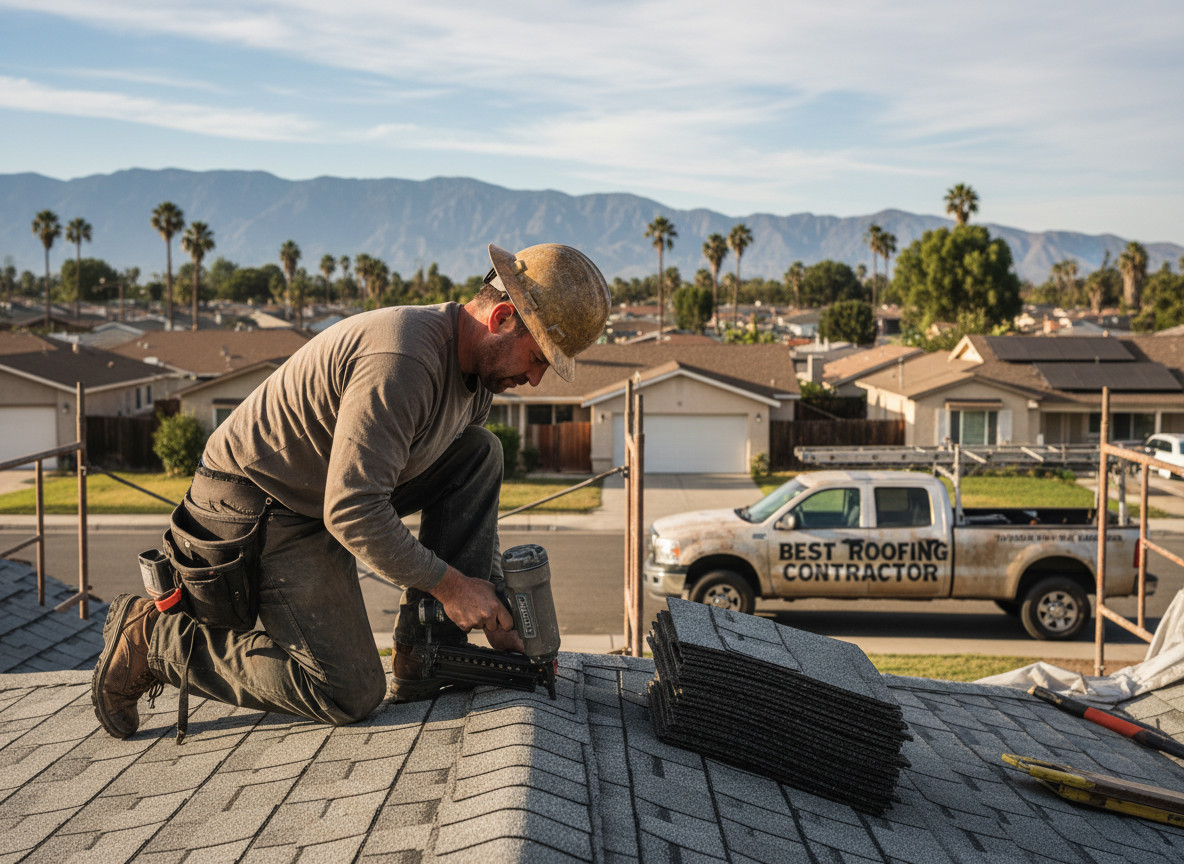
South Gate homes built in the decades after World War II often feature asphalt shingle roofs that have endured repeated cycles of intense sun and winter rains typical of the mild Mediterranean climate in Los Angeles County. Near South Gate Park and South Gate City Hall, many properties sit on flat lots where poor drainage around older fascia boards leads to rot that spreads under the underlayment before homeowners notice interior stains. Local building codes require permits for any tear-off exceeding certain square footage, and inspectors check for proper flashing at valleys and chimneys that can fail when adjacent properties in Lynwood or Huntington Park share similar rooflines. Working in these neighborhoods means accounting for tight setbacks and mature trees that drop debris onto lower pitches, accelerating granule loss on south-facing slopes.
Contractors familiar with Downey and South Gate know that skipping a full deck inspection during re-roofing leaves plywood weakened by previous leaks exposed to the next El Niño season. Metal drip edge must extend correctly under the starter course to prevent wind-driven rain from entering at the eaves, a detail that matters more here than in drier inland areas. Homeowners sometimes request overlay installations to save on labor, yet that approach traps moisture between layers and violates current Los Angeles County guidelines for most structures over thirty years old. Proper ventilation through ridge vents and soffit intakes becomes critical in these single-story ranch homes where attic temperatures climb quickly even in moderate summers.
When replacing roofs on streets bordering Huntington Park, crews must stage materials carefully to avoid blocking narrow driveways and coordinate with neighbors for shared fence lines. Synthetic underlayment now preferred over felt in coastal-adjacent zones provides better tear resistance during the occasional high-wind event that reaches South Gate. Edge cases include stucco parapets on small commercial buildings near Tweedy Boulevard that require counter-flashing integration to stop water migration behind the wall cladding. Skipping these steps leads to callbacks when the first winter rain arrives and water finds the path of least resistance through unsealed penetrations.
Technician insight
In South Gate, the thing that catches most people out with Best Roofing Contractor is the hidden plywood damage under original 1950s shingles on streets near South Gate Park, where decades of sun followed by winter rains have already softened the deck before any interior leak appears.
Winter Leak Near South Gate City Hall
Homeowner noticed ceiling stains after the first heavy rain. Inspection revealed failed flashing at a bathroom vent and rotted decking from an earlier overlay. Crew removed two layers, replaced damaged plywood, installed new synthetic underlayment and proper step flashing, then finished with matching shingles. No further leaks occurred through the next rainy season.
How it works
- 1
On-Site Assessment
Technician inspects the full roof surface, attic, and drainage points from the ground and ladder at the South Gate address to identify hidden damage.
- 2
Material and Code Review
Review existing roofing layers against current Los Angeles County requirements and recommend compatible shingles or membrane systems for the property age.
- 3
Written Scope and Quote
Provide detailed scope listing tear-off depth, underlayment, flashing details, and ventilation upgrades with clear line items before any work begins.
- 4
Execution and Final Walk
Complete removal, installation, and debris haul-off, then walk the roof and interior with the owner to confirm all penetrations and edges are sealed.
Pricing
Upfront written quotes after inspection; final price depends on roof size, number of layers, and any deck repairs discovered during tear-off.