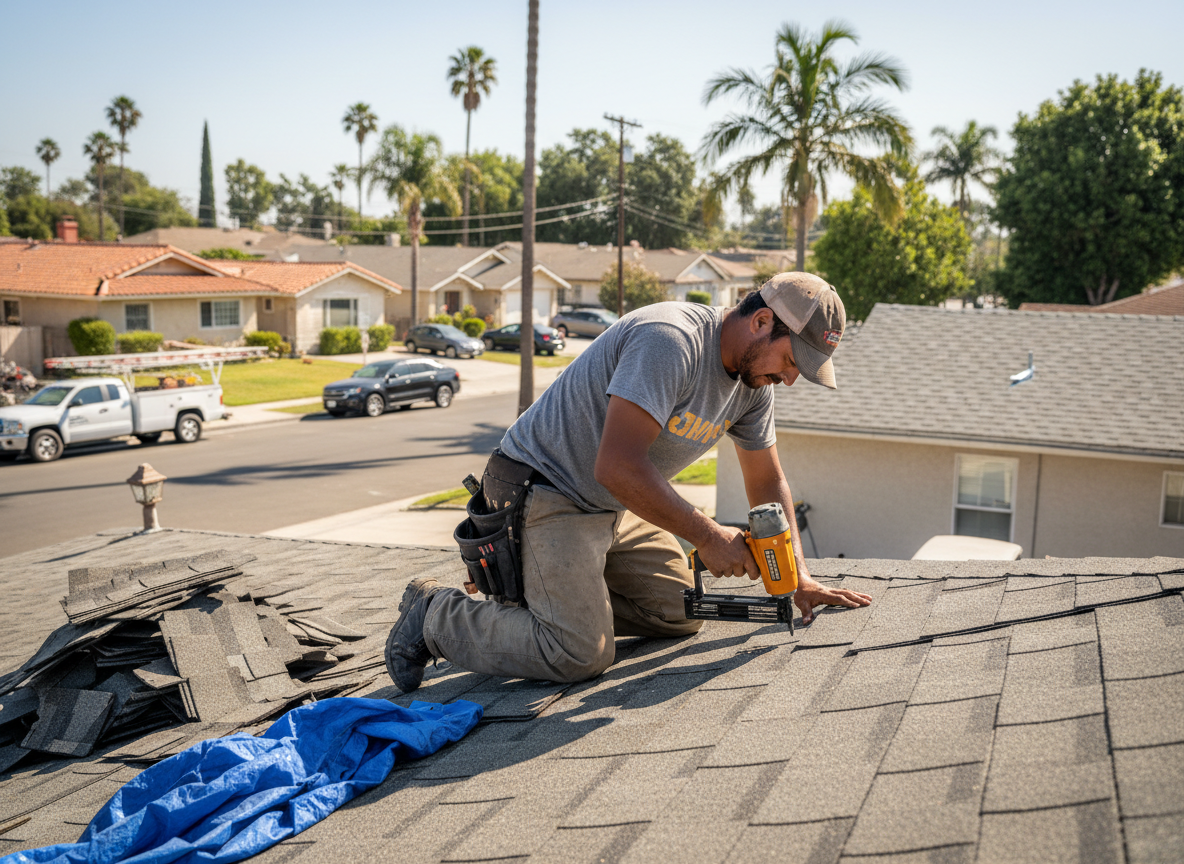
South Gate homes built in the 1940s and 1950s around South Gate Park and near City Hall often carry multiple layers of asphalt shingles that trap moisture and accelerate deck rot during the occasional heavy winter rains that move through Los Angeles County. A roofing contractor here must check for hidden plywood damage before any overlay, because the mild Mediterranean climate still delivers enough UV exposure in summer to degrade older shingles faster than in inland areas. Working in neighborhoods that border Lynwood and Huntington Park also means coordinating with tight lot lines and shared driveways that limit equipment access.
Downey and Huntington Park roofs face the same wind-driven rain that pushes water under flashing at chimneys and valleys, especially on the low-slope sections common to mid-century tract homes. Proper step flashing and ice-and-water shield placement at eaves becomes critical even without snow load, since Los Angeles County requires updated attachment schedules after each reroof. Crews that skip these details see callbacks the first time a Pacific storm stalls over the area.
Terrain around Tweedy Boulevard stays flat, so drainage relies entirely on correct pitch and clear scuppers rather than natural runoff. Older homes here frequently have original clay or concrete tiles that crack under foot traffic during inspections, requiring a roofing contractor to walk only on designated paths and document every broken piece before starting work.
When replacing a roof in South Gate, crews must verify that existing vents and attic insulation meet current energy codes, because many 1950s homes still have single-layer batts that trap heat and shorten shingle life. This step prevents callbacks that would otherwise appear the following summer.
Technician insight
In South Gate, the thing that catches most people out with Local Roofing Contractor is the hidden second or third layer of shingles on homes built near South Gate Park in the 1940s. When winter rains finally reach the deck, water travels sideways under the old felt and shows up inside walls weeks later, turning a simple overlay into a full tear-off that changes the whole job.
Hidden Deck Rot After Rain
A South Gate homeowner near City Hall noticed interior ceiling stains after a December storm. We found two prior layers of shingles with rotted plywood along the north valley. We removed both layers, replaced the damaged decking, and installed new flashing tied into the existing tile. The roof has stayed dry through the following two winters.
How it works
- 1
Site Assessment
Walk the roof and attic to document existing layers, deck condition, and drainage issues specific to South Gate homes.
- 2
Material Selection
Match shingles or tiles to the home's age and Los Angeles County wind requirements while confirming color availability for older tract neighborhoods.
- 3
Preparation and Tear-Off
Remove old layers where needed, replace damaged plywood, and install new underlayment suited to the area's occasional heavy rains.
- 4
Installation and Flashing
Apply new roofing with correct nailing patterns, step flashing at walls, and sealed penetrations around vents common on South Gate houses.
- 5
Final Inspection
Check every seam and drainage point, then clean the site before leaving the property.
Pricing
Cost depends on roof size, number of layers, and access constraints typical in South Gate's older blocks.