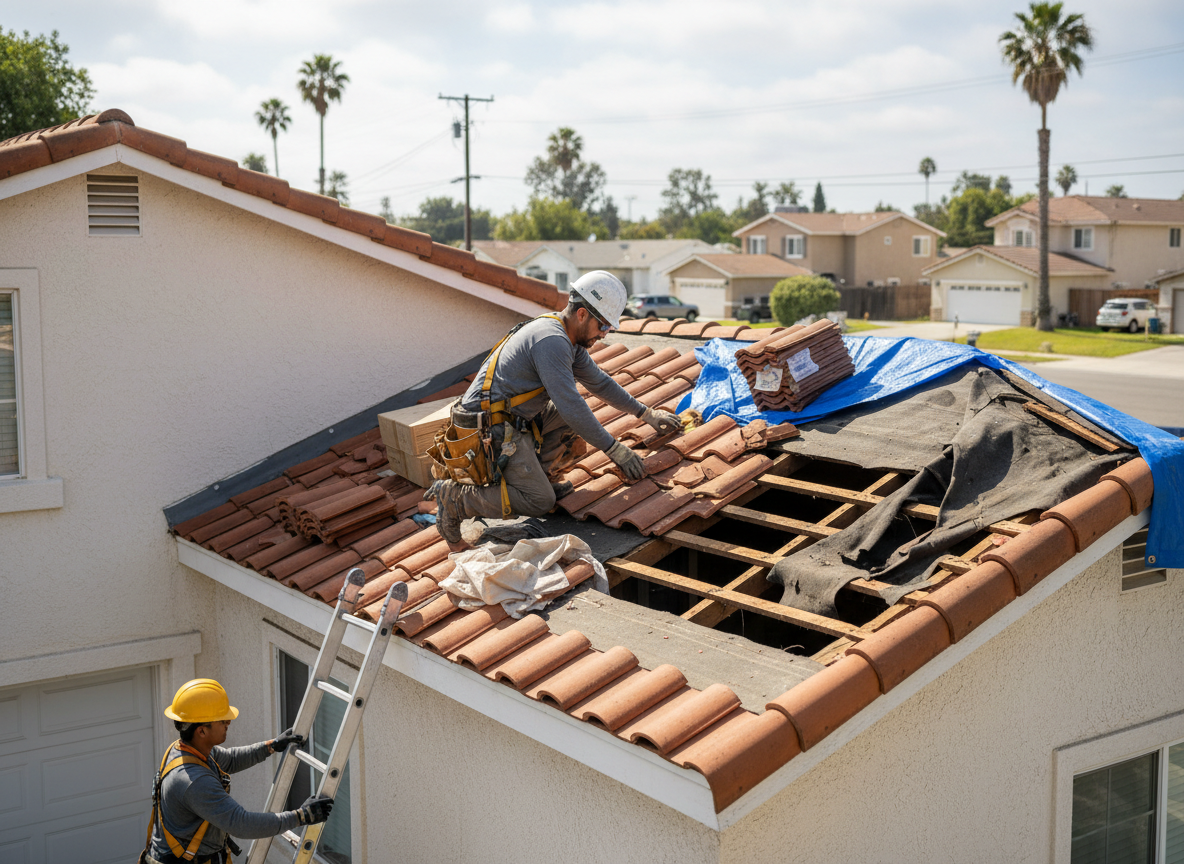
South Gate sits in the flat Los Angeles basin where mild Mediterranean winters still deliver sudden heavy downpours and gusty winds that drive water under aging asphalt shingles. Many homes near South Gate City Hall and South Gate Park were built between the 1940s and 1970s with single-layer roofs that have already been patched multiple times. When wind lifts a corner shingle during a storm, water follows the slope straight into the attic and soaks insulation before homeowners notice.
We inspect from the ridge down to the eaves, checking flashing around chimneys and skylights that older South Gate roofs often lack proper step flashing on. Debris from nearby trees in Lynwood or Downey can clog valleys and create ice-dam style backups even without freezing temperatures. We replace damaged sections with matching shingles rather than full overlays because multiple layers trap moisture and violate current Los Angeles County roofing guidelines on weight limits.
Edge cases we see regularly include wind-driven rain entering through ridge vents that were never baffled and water migrating along rafters into walls shared with neighboring homes in Huntington Park. We always pull permits when the repair exceeds ten squares and document the existing layers so future owners know what is under the new surface. Homeowners who wait until visible ceiling stains appear usually face larger interior repairs once the decking has already softened.
Technician insight
In South Gate the thing that catches most people out with Storm Damage Roof Repair is how the older single-layer roofs around South Gate Park hold water along the valleys once wind lifts just a few shingles; homeowners often think the leak is a small spot when the real issue is the entire valley has been channeling water under the deck for weeks.
Wind-Driven Leak Near Tweedy Boulevard
A South Gate homeowner noticed ceiling spots after a winter rain. We found wind had lifted shingles along a valley on a 1960s roof two blocks from South Gate City Hall. We removed the compromised section, replaced softened plywood, and reinstalled matching shingles with proper flashing. The attic stayed dry through the next several storms.
How it works
- 1
Initial Site Inspection
We walk the roof and attic during daylight, noting wind-lifted shingles, water stains, and debris accumulation specific to South Gate's tree-lined streets.
- 2
Damage Documentation and Quote
Photos and measurements are taken for insurance and homeowner records; we itemize only the affected sections rather than pushing full replacement.
- 3
Targeted Tear-Off and Repair
Damaged shingles and underlayment are removed down to sound decking, new ice-and-water shield is installed at eaves and valleys, then matching shingles are installed.
- 4
Final Leak Check and Cleanup
We run a controlled water test on repaired sections and remove all debris from yards and driveways before leaving the property.
Pricing
Upfront written quotes after on-site inspection; final cost depends on extent of decking damage and number of layers already present.